
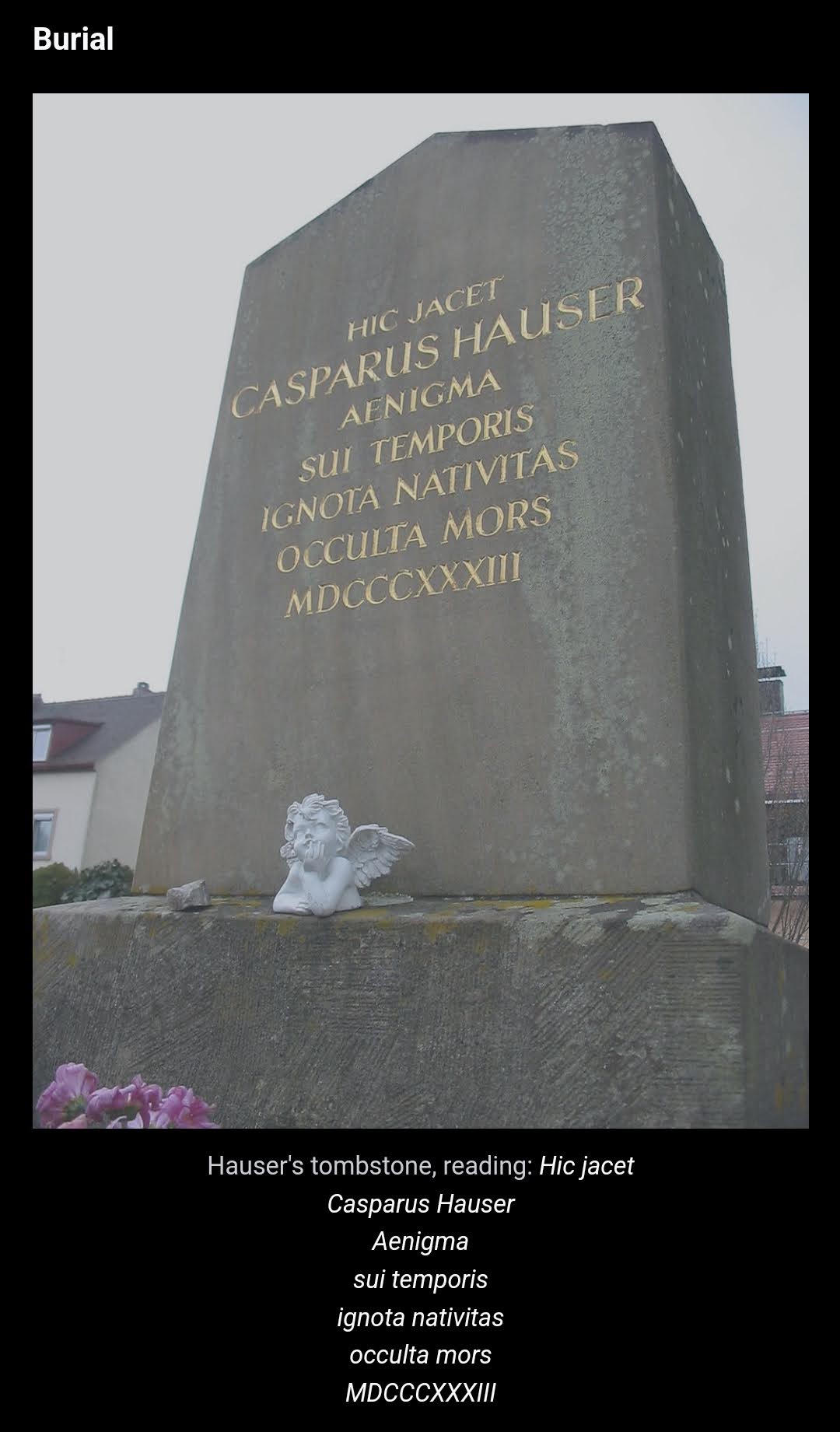
Kaspar Hauser was a real feral child who arrived as a teenager in Nuremburg in 1828. He was taken into various custodies of church and state in 1828.
Over the next few years, Kaspar is prodded, displayed, and ridiculed, then educated and introduced to society. Everywhere he goes he is treated as a curiosity. Kaspar, experiencing the offerings of the world outside of a dark cell for presumably the first time, is unable to indulge basic curiosity about the social order. Kaspar points out contradictions in several instances and is immediately scolded or shunned for questioning norms.
While many have tried to solve the mystery of Kaspar’s origins, Herzog points out this mad tendency within society. He shows that society’s customs and motivations are a pathology. Every instance of trying to understand, solve, or civilize Kaspar, is an opportunity missed to experience him, and to experience the world anew through his eyes. Kaspar connects with nature, and music, and music seems a preferred language.
The film’s German title: Jeder für sich und Gott gegen alle translates to “Every Man For Himself and God Against All.” There is an exchange between Kaspar and his patron:
Patron: “You used to think your dreams were real. It can’t be true when you say you’re only happy in your bed.”
Kaspar: “To me, it seems that my coming into this world was a terribly hard fall.”
In the oppressive structures of social order devised by Europeans, it certainly feels like God is against all.

 Herzogian