• Posts
  • Films
  • Contact
  • Home

Herzogian

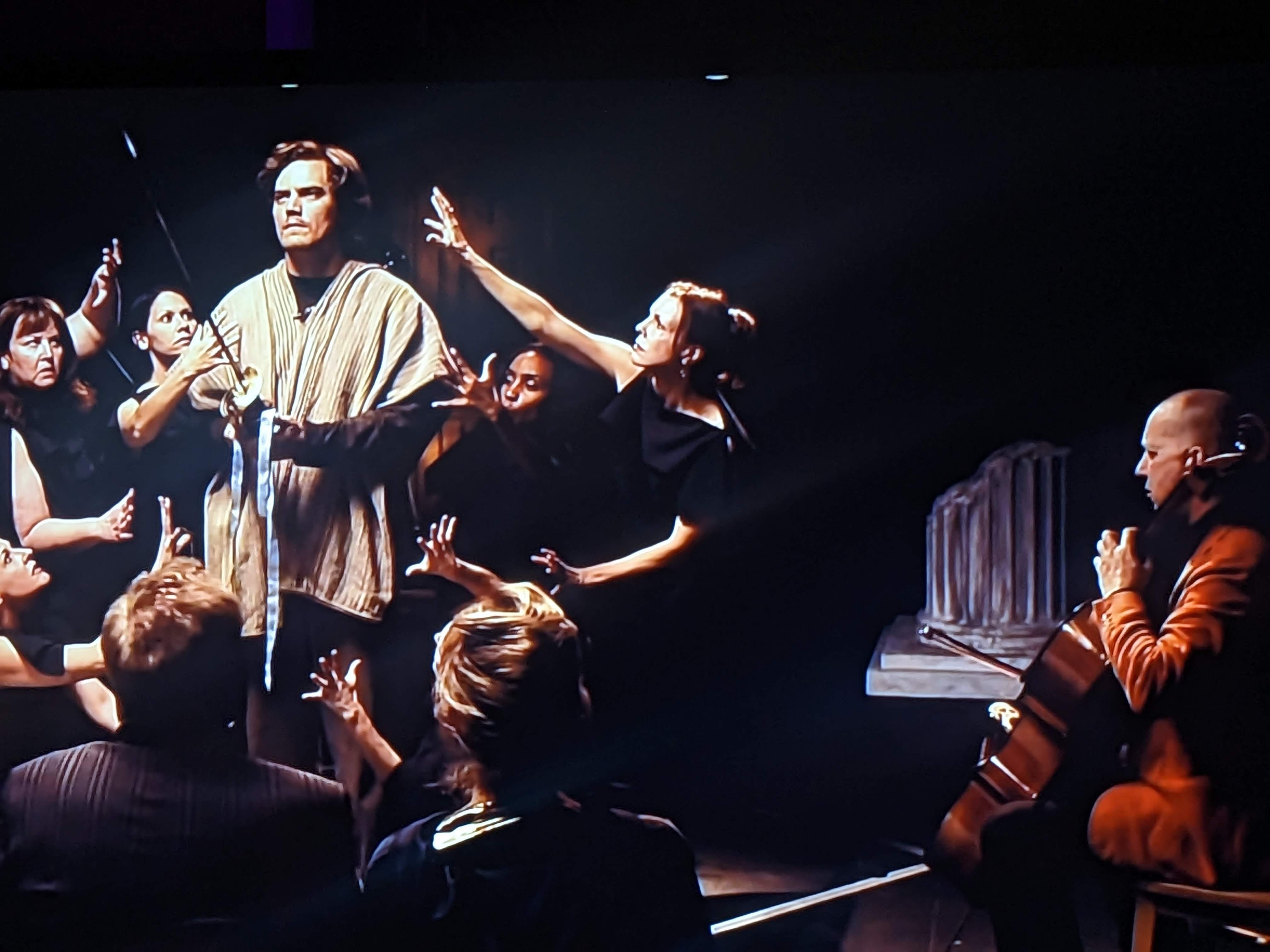
  • Where the Green Ants Dream

    September 19th, 2022

    Successful social realism feels like a rare treat these days. Some contemporary mainstream films might contain interesting commentary on a government or culture, but class-consciousness slips away in favor of a stock hero’s quest or feel-good twists. It’s often a question of access and representation – who gets to tell the story about who?

    One of the most intense realist films of the 2000s is Samson and Delilah, a love story about two teenagers in an Aboriginal reservation. Unfolding nearly completely non-verbally, the film follows the repetitive days of normal life for the teen, until an event forces them to run away together. The film was the first feature of Warwick Thornton, a Kaytetye Aboriginal director (a great filmography is now on Criterion). Thornton shows that the persistence of Samson, and the patience of Delilah are traits quickly dismissed and discarded by white society. But while whiteness makes up part of the landscape the characters inhabit, the central force of the film is the world the characters create. It feels that such an intimate portrait might not be possible made by a white man, for an inherent lack of understanding. As a non-Australian, non-indigenous viewer, there’s likely more I won’t understand from even viewing, with cultural norms lost in translation.

    Schisms between sophisticated Aboriginal modes of expression and communication, and white man’s demand for precise pronouncements and adherence to convention is a theme in Where the Green Ants Dream. The film primarily follows a white geologist at a mining company whose project is interrupted by a large group of Aboriginal people. We see groups of steady elders standing in front of bulldozers, whose white drivers who become increasingly unhinged in the obviously sweltering heat. We discover the project is interrupting – blasting through – the dreamtime origin of the green ants. Throughout the film, the communication breakdowns about the importance of this precise location are both comedic device, source of frustration, and pivot point for understanding the actions and worldview of the Aboriginal community.

    Among many Aboriginal cultures, the dreamtime is when the world was made by the ancestors. I lived in Australia briefly and had a brief glimpse into aspects of Aboriginal country and cosmology. For me, it was a formative experience: education in the so-called United States is focused more on the colonizers and waves of settlers, rather than on the land and original peoples. Learning of dreaming and the dreamtime was fundamentally shattering to the conventions I learned while socialized in a white man’s education system. Thus, I identify with Herzog’s fascination that turned into deep respect for the indigenous cultures and perspectives featured in the film. Where the Green Ants Dream caused quite the stir, angering some white Australian audiences and the film only had a limited release there. But what is the point, when a white man is mad at a white man, but they still push down the indigenous perspective? After centuries of genocide, forced relocation, and erasure, can white folks just step aside so indigenous folks can represent themselves without getting pushed down?

    In so-called California where I live, recent debate over a famous white fella environmentalist John Muir. During a period of heavy logging and forest clearing by the US Forest Service, John Muir’s writings and activism about “magnificent un-peopled expanses of forest” stopped clear-cuts and helped create national parks. While seen as a hero to white environmentalists, he is also viewed as a “symbol of white settler appropriation of the sanctity of land,” as science-fiction writer Kim Stanley Anderson shares in this interview. Indigenous peoples were inhabitants and stewards of the land for generations before Muir. How can we all be a part of society’s evolution to appreciate how white fellas like Herzog, and Bruce Chatwin, represent indigeneity but keep working to deeply incorporate truer histories into our current systems and practices, (especially when all the top content in searches are white folks?!)?

    Material support like subscribing to indigenous-run media and art, and supporting the land back movement by paying tax to indigenous owners of the local land, and featuring artists and thinkers who are indigenous.

    In that spirit, while not enough, here a few indigenous media and Aboriginal artists resources that I’m certainly seeking to learn and follow:

    • Eight Ladies by Dena Curtis and Nice Coloured Girls by Tracy Moffatt
    • A recent list of films by Aboriginal directors
    • One of the most prolific Aboriginal artists of the contemporary era: Emily Kame Kngwarreye
    • All My Relations podcast
    • The Red Nation organization
    • Ohlone land, (the land I am on)

    Any media any readers wish to share – please do in the comments!

    And p.s.: I couldn’t wrap up this post without a shout out to the green ants: here is also a video of David Attenborough showing how they build their nests!
  • Nomad: In the Footsteps of Bruce Chatwin

    September 10th, 2022

    Today, for the 5th time this year, I’m putting on Nomad. Less than 3 minutes in, while the camera sweeps over gorgeous Patagonian glaciers, piano pinging, Bruce Chatwin’s voice is reading about a piece of brontosaurus skin in his grandmother’s cabinet: I’m already bawling.

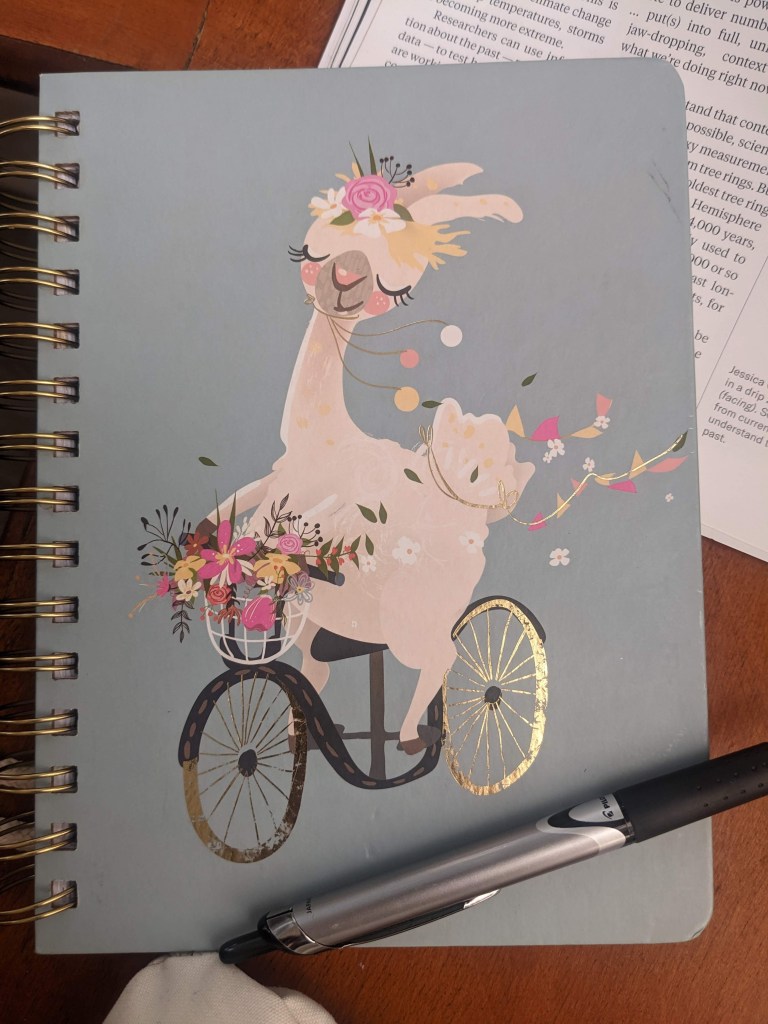
    Today is a day I’ve dreaded for nearly a year: this morning I finished writing the last page of my beloved late Mama’s llama journal. I cried when I finished my last entry. I loved writing in this journal. My mom loved cute, kind of kitschy things, the type of little details and objects that would make her smile in her day-to-day. I’ve picked up this journal nearly everyday, the cover a carefree llama blissfully smiling while on a bicycle. Now that she is gone from the earthly plane, I get to think of her little moments of joy and sweetness that composed her inner landscape. 

    My mother was a very hard worker. She was a first-generation immigrant from the Philippines to the US, and the 4th of 6 children. I think if she had it her way, she would not have chosen to work as hard as she did. Above all in her life, I know she loved me and my two sisters and worked to hold our family together – much of our life was in a survival mode. She found moments of adventure for herself through it all, little valves to express her fascination with life and the planet. Her moments of adventure and of rest were precious, and in the last years of her life she found more moments of rest and felt the feeling of freedom that comes with deep rest.  

    When my mom went on hospice after just six months from her initial diagnosis of biliary cancer (later diagnosed as metastasized pancreatic cancer), my twin sister and I were the caretakers at her side day and night. We used a weekly planner to log her medications, anything of medical significance; and a journal, the llama, for dreams and observations that didn’t fit in the planner. Mom-isms. 

    The last day of her life was sweet and weird. I didn’t know at the time but she was telling me throughout the day that it was her last day. All day she had me and my sister running around, near scrambling for the right kind of popsicle, and she made me re-do a 7-Up slushie a few times (I finally got it to her liking!) Cancer is fucking horrendous, but there were so many hilarious moments that day, and so much beauty.  

    Towards the end of the night, when things started to get very strange, her body started rapidly going through the death process, there were moments where I couldn’t do anything. I just sat in a little bedroll, having moved from my sister’s couch to the foot of the hospice bed. With tired eyes wrenched wide open by witnessing the medical events and simultaneous miracles that were happening, I furiously logged everything that was happening to my mother. I’ve never witnessed anything so breathtakingly brave. In the weeks after she died, I started using this journal to write my grief, lessons through the depths of mourning, and the ebbs of “personal development” that happen after great loss. 

    Sometimes the pain of losing her grips me so deeply, clawing at my heart and lungs and shoulders and chest. 

    I love you so much, Mama. I miss you so much every day.

    Mama died in the early morning hours of October 17, 2021. I found out recently from watching an episode of Architecture Digest Open Door (lol) this was also the day Kourtney Kardashian and Travis Barker got engaged. I love picking up these little facts that don’t quite tarnish the date but give it a spin: like… life just goes, it never stops. Whether we like it or not. The spirit moves seamlessly into new forms. We try to hold on to the body, or these objects, or attachment to significance, but they dissolve into impermanence over which we have no grip. It’s all a mystery, and we can only release whatever grip we think we have. 

    Now back to the documentary.

    The shared points between Herzog and Chatwin are romantic, weaving and bumping over more than a decade of friendship that took place over many continents. In the film, Herzog retraces the themes and ideas of their earlier years in a retrospective of Chatwin’s life and adventures. There are echoes throughout of Herzog’s past films as well, we see a tapestry of a shared philosophy, regarding the origins of the bloom from which humanity moved and how ideas and songs and paths developed. Herzog follows an “erratic quest” the best kind of quest! Chatwin’s “What am I Doing Here?” spans several years and all across the globe. Nomad is like that, and I won’t spoil the adventure or philosophy or storytelling of the film. If you haven’t yet seen it – just do it. It’s ghostly and mind-blowing and perfect. I’ll only write about this little bit, about a part that pertains to my shared feeling of honoring the life of a loved one. 

    We trace an outline of Chatwin’s origins. There are several scenes with Nicholas Shakespeare, Chatwin’s biographer. Shakespeare describes that each of the objects that Chatwin coveted, the things from his grandmother’s cabinet of curiosities were “the clotheslines upon which his stories were hung.” The objects from his childhood were the inspiration points, where Chatwin followed the drama of the object to its source, which in turn became adventures to be immortalized in great books. We visit Silbury Hill, the mythical origin place that was Chatwin’s pivot. “Everything that came after was an echo of this.”

    We get a glimpse of Chatwin’s notebooks. We are read the last lines that Chatwin ever wrote, in one of his moleskine journals. Herzog closes the book. He says (with the perfect dramatic cadence that only Herzog could utter): “The book is closed.”  

    With Herzog retracing these footsteps, the echoes of the closing of Chatwin’s book reverberate, prompting new chapters to open. As I close this notebook I shared with my mama, I await opening a new chapter, in her footsteps. ❤

    “Mama’s Llama” journal
  • La Soufrière + Into the Inferno

    September 5th, 2022

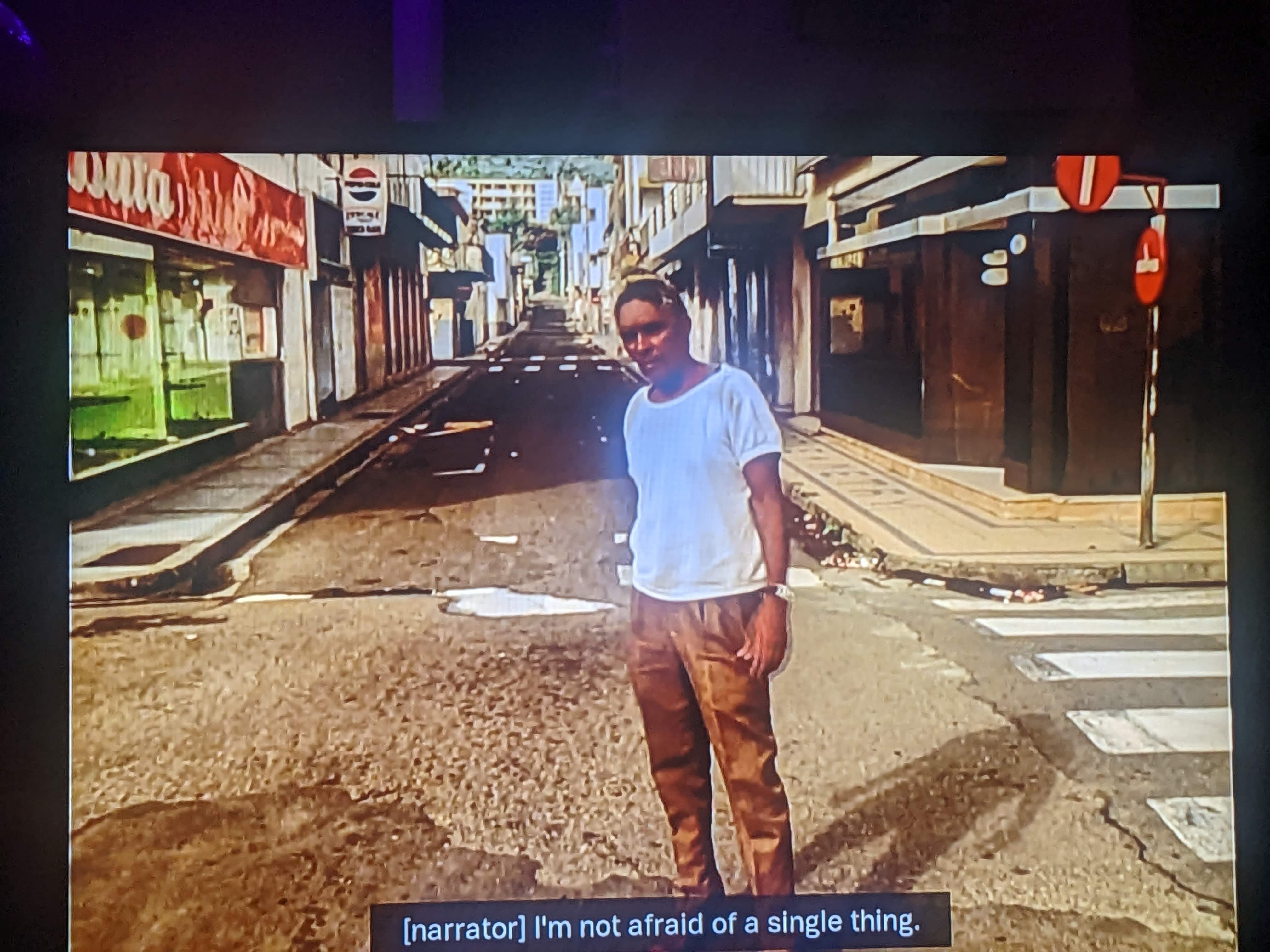
    In 1976, 75,000 people fled the whole southern region of the island nation of Guadaloupe, and Werner Herzog showed up with a film crew to find the one man who refused to be evacuated. The island may have been their gravestone, with the man’s words as their epitaph:

    “Like life, death is forever. I haven’t the slightest fear. God takes everyone to his bosom, he has ordained this for us. Why should I go? Death waits forever. I am not afraid of dying. Sure we are on a powder keg, aren’t all of us… it is God’s will. I’m at peace with myself, with what’s inside me. I am poor, I have nothing. Where should I go?”

    Almost-last words while Waiting for an Inevitable Catastrophe

    Life’s gamble, for those who live in poverty, is thus defined. Herzog says at that point in La Soufrière: Waiting for an Inevitable Catastrophe, that it is not the volcano that interests him the most, but the treatment of Black people on the island.

    38 years later, in Into the Inferno, Herzog pivots away from the material point of La Soufrière. Herzog and volcanologist Clive Oppenheimer take us to visit another type of gamble for life – only slightly less death defying – atop another volcano. We follow the search for the remains of hominids with an archaeological dig crew. At Erta Ale, the “Gateway to Hell”, ancestors came to the volcanic region to collect obsidian likely as a tool. A fun fact is dropped here, obsidian was used recently in the medical field as a preferable instrument for eye surgeries, as it is the blades are sharper and finer than steel. The fossilized and crushed bones of the ancestors are entombed in the volcanic ash and silt. The gamble is to find what bones belong to what or whom, atop the 6 million year old Middle Awash valley (a better bet when you have an expert fossil hunter on the team). On a site of supposed destruction, the cycle of creative force awaits mankind to understand itself more deeply (with humankind so lucky to have a Herzog to bring understanding to the masses!).

    Human relationships with the volatility of the Earth have defined human existence for epochs. Humans as a species gamble with volatility every time we have settled, but living through the climate chaos of the Capitolocene is creating a whole new level of predicament.

    I am writing this during a heatwave, where many parts of California, an already hot region, are expecting records to be shattered. The effect on an already drought-stricken corridor is expected to be disastrous. The Sacramento and San Joaquin valleys see settlements suffering from the boom and bust of industrialized agriculture, dozens of crowded mega-prisons that California’s colonial legacy filled up with dispossessed, in a region that has seen a crisis of homelessness due to the profit engineering of a speculative housing market. Pivoting back to Herzog’s earlier social point, these catastrophes have historically targeted communities of Black, Indigenous, and immigrant people, and those who work yet remain in poverty.

    We all seem to know that climate chaos will have increasingly inevitably catastrophic social consequences unless a large-scale change in fossil fuel reliance happens, the possibility of which seems dwindles due to the pathetic impotence of global decision makers. The next best solution for the poor has been evacuation, creating a global refugee bottleneck at the borders of whiter nations. The so-called Golden State, formerly known for gilted minerals but the “gold” today is the dry yellowed grass covering formerly lush hills, has been an utter success for the rich, and catastrophe for the poor.

    Living in the Capitolocene should not mean inevitable catastrophes, when this era of the Anthropocene could mean something objectively better, an era where each man, woman, and child could achieve their highest human potential in art, science, ideas, love. As long as the elites in power keep gambling with life, life will feel like a gamble for the poor. Can humankind get out from under the boot of those who gamble with life? Can people and the planet enact a relationship with each other and the planet that recognizes true dignity and agency?

    In Inferno, Mael Moses, Chief of the Endu Village on the border of a volcano in Vanuatu, shares the history and spirituality that lives in their volcano. In dance processions, the people engage to please the volcanic spirits. It was the perspective of locals that tourists were the cause of previous volcano eruptions: the volcano demon was looking at the people of the tribe and it recognized them. Yet when it looked upon faces of tourists, perhaps people who did not honor the spirit in return, the volcano demon became angry and erupted. Is recognizing and respecting the unknown, instead of imposing order upon it, the way to maintain dignity and agency of that entity?

    The “trigger” and destructive potential of volcanoes is still near impossible to reliably predict. The work of Kattja and Maurice Krafft, briefly mentioned in Inferno, has advanced global understandings of volcanoes. The Fire of Love is an ode to the volcanologist couple whose respect for these volcanoes defined their lives and deaths. In the film we see dozens of lush borders of calderas, as volcanic ash offers rich, fertile soil for new life to grow. After spanning the globe studying “friendly” red volcanoes, their work turned towards “monster, killer” gray volcanoes. While studying Mt. Unzen volcano in Japan, they were killed by a pyroclastic current that swept over them. While remains were not found, some objects that belonged to both were found next to each other. The work of this couple/team expanded humankind’s knowledge of the interrelation of the unpredictable, and went towards advising in evacuations that likely saved tens of thousands of people, most immediately was the evacuations prior to the eruption of Mt. Pinatubo in the Philippines, just months after Unzen.

    In Fire of Love, Maurice Krafft says that to box volcanoes into categories would be archaic scientific thinking, stripping each volcano of its unique personality and individual dignity. The magical side of volcanology in Inferno takes different forms on different islands, reflecting each volcano and regions various personalities. Offerings, reconciliations, and rituals take several days and involve a large swath of people of each respective society. As each volcano is connected beneath the surface of the earth, there is not a single person there who is unconnected to their local volcano.

    “There’s no permanence to what we are doing – human beings, art, science… our life can only survive because volcanoes create the atmosphere that we breathe,” Oppenheimer says. To humbly live on this planet, to surrender to living in a volatile place, means respecting the impermanence of ourselves and each other, in cycles of creativity that abound through and beyond us.

    I think of the masses of people in the web of life: all the people who make the stuff of this world and make life livable. Today the destructive forces of extractive profit and order imposed over nature simultaneously double-down and wane. The creative potential of people dispossessed by capitalism will continue like the magma beneath volcanoes that has always been moving, finding, and creating pathways beneath and through the crust. Perhaps it is a matter of faith for me: the imperceptible tremors propel me. I believe in the inevitable eruption over the supposed current order of society, where creative lava will flow anew for seeds to cultivate another epoch of dignified, interconnected life.

    Dignity and defiance in the face of an Inevitable Catastrophe.

    P.S. HAPPY WORLD HERZOG DAY!!!

  • The Wild Blue Yonder

    September 3rd, 2022

    A Brad Dourif Appreciation Post.

    I think people could use the words underrated and underappreciated to describe Brad Dourif, but I think I’d like to get that out of the way and just say that he’s a fuckin’ genius.

    Who else can boast such accolades as:

    • Been in one of the planet’s most successful franchises, as a skin-crawling, unforgettable creep
    • One of the top two characters, on one of the top HBO series of all time
    • Scene stealer in IMO, the most underrated film of the Aliens franchise
    • Was the voice of MUTHAFUCKIN’ CHUCKY!!!

    Yet I’m guessing he can probably go get groceries or have a meal out with his family and not get hounded for autographs.

    Dourif’s piercing blue, unblinking eyes laser into your soul as he monologues in character as The Alien: “My Planet is: The Wild. Blue. Yonder!”

    This film is a bit Dada, chaotic, a bit mournful, and a bit “out there.” Herzog decontextualizes footage from a space shuttle mission and an Antarctic dive, interspersing with Dourif walking through Slab City, CA. It feels like a leveling up in conceptual experimentation and communicating the philosophy of Herzog, similar to Lessons of Darkness and Fata Morgana.

    The Alien’s soliloquy continues, relating the voyage of a spaceship passing the Earth en route to Alpha Centauri. The spaceship makes observations of mankind and history with comments on the madness, murder, and rebellion on Earth. For me, it would hardly be possible for anyone else to recite Herzog’s philosophy. There’s a force and a delicacy in Dourif’s performance that delivers an indictment against mankind’s sins with derision and compassion.

    He names the domestication of pigs for food is mankind’s first sin. This is the beginning of mankind becoming sedentary. The domestication of animals for food, as distinct from the domestication of animals like dogs, as “they’ll go with you on your nomadic hunts.”

    A decision to settle from the spaceship is made, as a reasonable solution for protection from chaos. “Chaos is not a negative thing – it allows us to conserve energy in many ways,” says a scientist. Chaos is what allows space travel to happen, as chaos is harnessed by physicists in the slingshot method of launching toward a destination in the yonder. I think of how chaos is harnessed for the energy required to support sedentary communities: velocity of rushing river water for energy, of gas being captured and stored and then an energy resources governing body gets to decide who it goes to and how much to charge.

    We follow images of the Earth colonizers, and we meet a smiling scientist who excitedly tells us the possibility of space exploration toward space colonization for humans, with Earth being maintained as a pristine resort planet. I think of Herzog thinking, what about just to explore, without intent? To just step foot into the wild yonder, wild nature for it’s own sake?

    The soundtrack to this film is incredible. The operatic score is used several times in subsequent Herzog films, is Ernst Reisiger’s compositions featuring Moel Sylla and Voches di Sardinna, a group of 4 vocalists who sing facing each other in a circle, in a traditional Sardinian way. (Herzog also uses Tuvan throat singing in Lessons of Darkness, here’s more on throat singing just because.)

    Musings on nomadism and chaos aside: one day soon – a Dourif-a-thon!

  • Goodbye, Gorby.

    August 30th, 2022

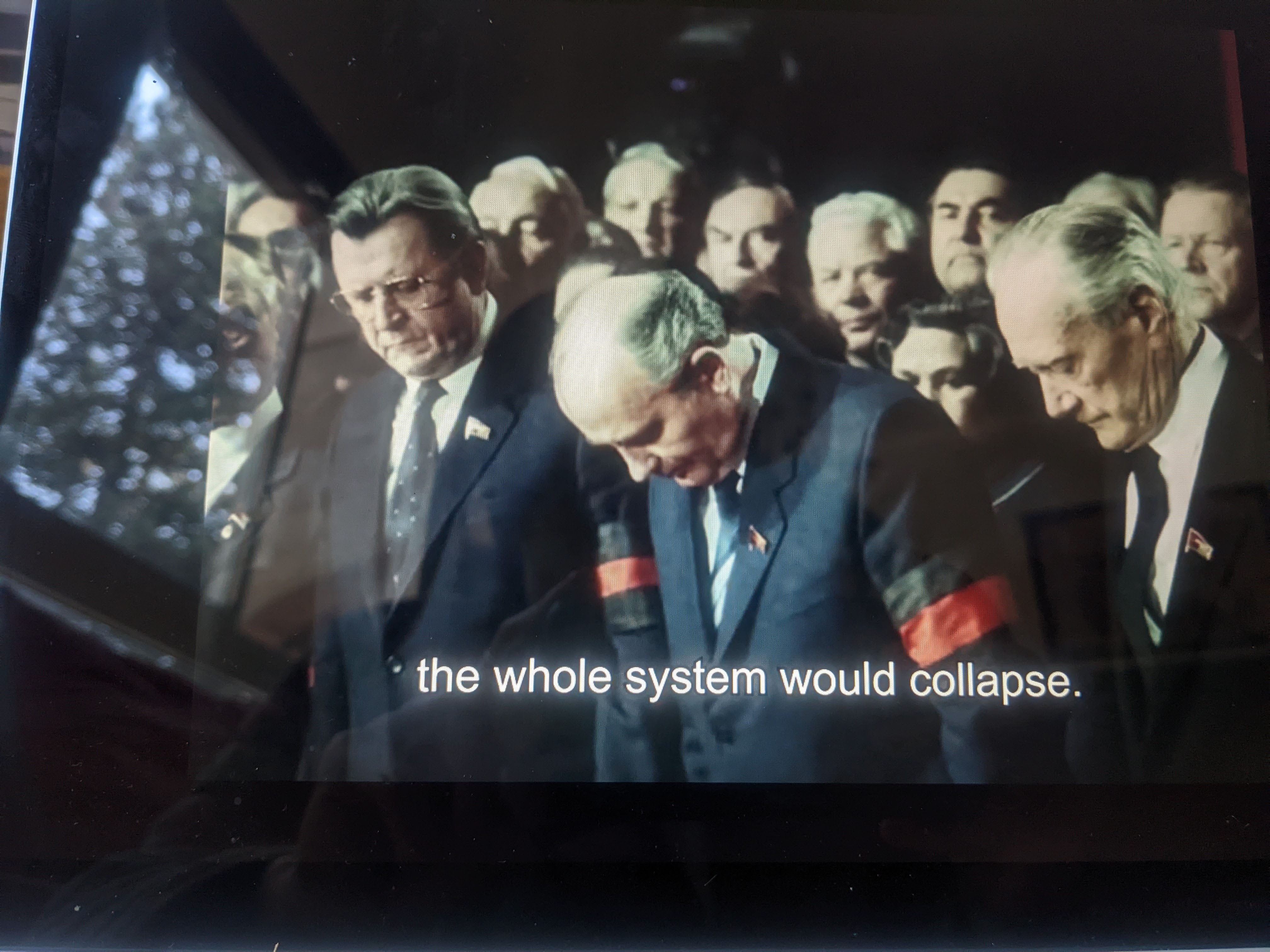
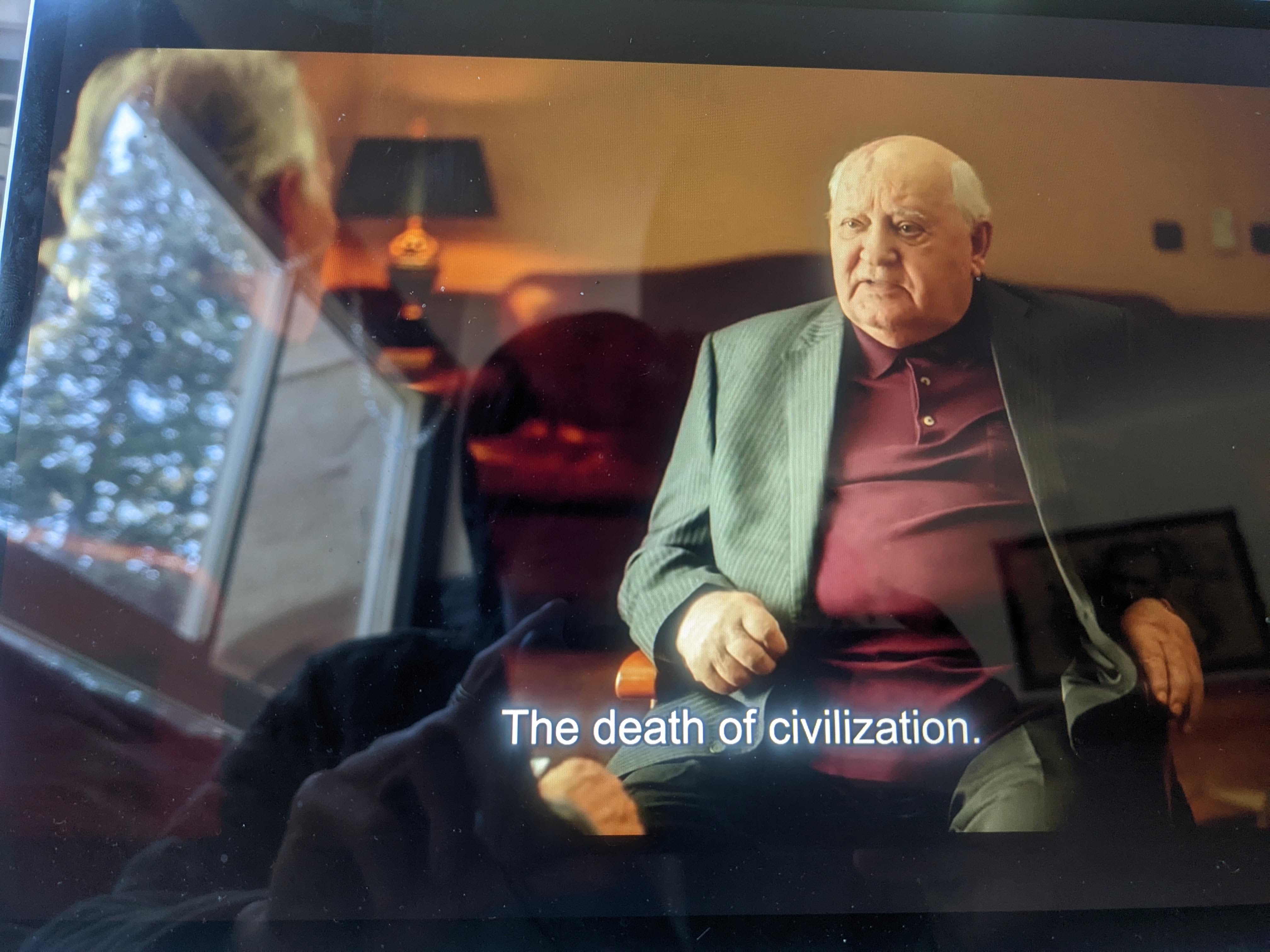
    In 2019, Werner Herzog took us along to Meeting Gorbachev. The interview has the spirit of a respectful and at times jovial chat with an elder with a fascinating former job, rather than an interrogation of a world leader whose architecture of one of the world’s largest and most formidable power structures contributed to its demise. While some celebrate and others call it catastrophe, the fall of the USSR completely jolted a political and economic balance with reverberations throughout the world today.

    Today, news has emerged of the death of Mr. Gorbachev at age 91. There are tributes all over the web, but here, I would rather to share options for a Soviet binge – a variety of media to briefly visit the world in which Gorbachev’s legacy is woven.

    –State Funeral by Sergei Loznitza. This is one of the most intense and boggling 90 minutes you will witness on film, a collection of footage from around the USSR taken on the massive funeral day of Joseph Stalin. The legacy of Stalin is part of what Gorbachev inherits.

    -Oliver Stone’s four-part Putin Interviews, 2017.

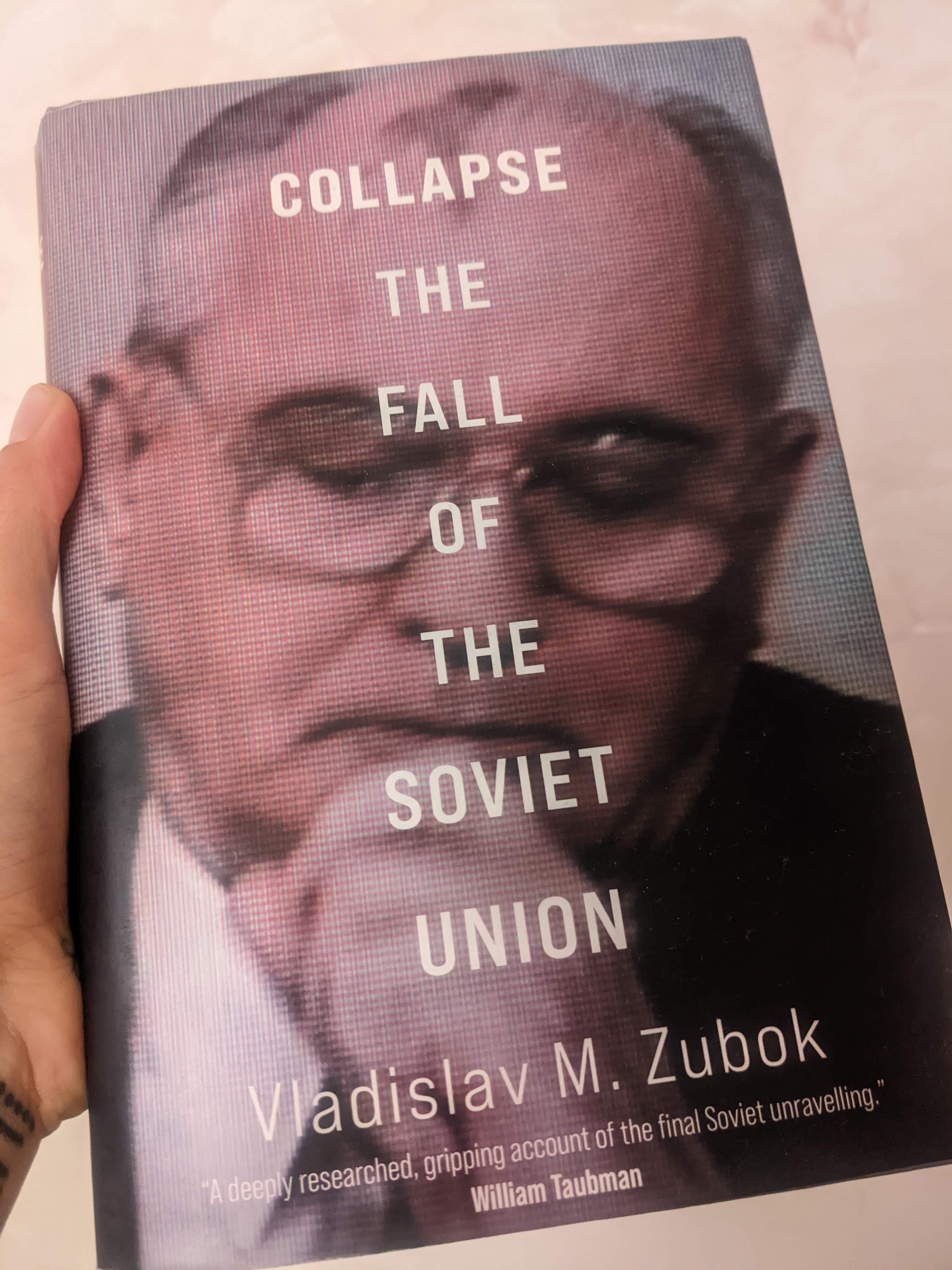
    –Collapse: The Fall of the Soviet Union by Vladislav M. Zubok. The book could be an in-depth companion to Herzog’s documentary, for context and scale of the USSR state apparatus, Russian society, and Gorbachev’s analysis and reforms: from domestic economics, global politics, and the military.

    Rest in Peace, Mr. Mikhail Sergeyevich Gorbachev.

  • Lessons of Darkness + Fata Morgana

    August 28th, 2022

    Lessons of Darkness is hellish.

    It opens with a quote by Blaise Pascal: “The collapse of the stellar universe will occur like creation – in grandiose splendor.”

    We are walked among ruins, and the abandoned machinery of torture. We meet woman who cannot speak, her sad eyes tell her story that parts of her spirit have been irreparably broken by the war. We visit “Satan’s National Park,” where everything that looks like water is oil. We fly into a minaret hollowed out by fire. It is utter devastation. Wagner plays while flying over burning Kuwaiti oilfields and a montage of heavy machinery, of men in waterproof turnouts pressure-hosing oil off. Their eyes are not of sorrow, somehow we know this is their liquid black gold.

    There’s little human presence in the film, except these men. Every human sense you can perceive from the shots are grueling. The total devastation of the landscape and the people of this place suggests a determined, hurtling domination of a killing machine.

    . . .

    Fata Morgana. Ecstatic creation. Paradise without a conception of bliss. Splendor, albeit slightly frayed and scuffed, but alive!

    Fata Morgana is perhaps the only film by Herzog that he does not narrate, Lotte Eisner reads from an adaptation of the Popol Vuh, a Mayan creation myth. and then Songs of Leonard Cohen plays. The images are monochromatic and sparse of desert landscapes, then the people, especially all the children, some dressed in bright blue, are especially striking against the landscape.

    . . .

    I watched these films together. I think I read somewhere that Werner Herzog doesn’t really care about doing psychedelics. These works are as immersive and humbling as LSD or perhaps a burst of adrenaline, if one leans in to the experience.

  • The Great Ecstasy of Woodcarver Steiner

    August 26th, 2022

    Free on Vimeo, YouTube and Tubi!

    Woodcarver Steiner looks like Beck and Charlotte Gainsbourg had a child.

    Herzog, in sort of a sports reporter fashion, speaks directly to the camera while holding a microphone and relating his belief that Walter Steiner is the World’s Best Ski-Flier. We see Herzog fanboy a little bit. As dramatically as a sports reporter, he stands at the point exactly where this film had it’s inception, where Steiner landed a nearly record-breaking ski jump at 176m. Nearly, because the judges invalidated Steiner’s score on the technicality that he landed “out of bounds” but actually beyond the bounds.

    We meet Steiner in his woodshop, then follow him to practice, where he jumps from deep squat to balletic leap (the power! the grace!).

    Steiner is a man at the top of his craft, and he shares the anxiety of being great – where your audience want to see you fail or expect something more spectacular than yesterday. We see several jumps, and it’s an exhilarating compilation. One can see from the jump of the jump (haha) exactly how Steiner’s utterly precise form is superior to competitors. Steiner loves to fly, and he is his own biggest competitor. There are some lessons, musing about fear, about not overthinking… but beyond deep lessons this is just actually fun to watch.

    Huge bonus is the chill-dude music by Popol Vuh.

  • Ballad of a Righteous Merchant + My Son, My Son, What Have Ye Done?

    August 24th, 2022

    “We caught ourselves at the crossroads of a story, where myth and reality become one…”

    So begins Ballad of a Righteous Merchant (2017), Herbert Golder’s documentary about Werner Herzog. Ballad was shot during the filming of Golder and Herzog’s co-written film My Son, My Son, What Have Ye Done. I had never heard of My Son prior to stumbling across Ballad for free on the streaming site Tubi. Ballad is as essential Herzog viewing as Burden of Dreams, Les Blank’s 1982 nail-biting doc about the nearly disastrous making of Fitzcarraldo.

    Following the hushed excitement of Golder’s introduction, the narration continues over behind-the-scenes footage of My Son in sweeping, symphonic words uttered in loving fascination of Herzog as main character. On screen, the cacophony of a film set is punctuated by slight absurdity – a pink house swarmed by a SWAT team, a plastic figurine of a flamingo smashed into a tree, a jiggling bowl of shiny jello. Amidst the chaos, one’s eye is trained to the solid and magnetic figure of Herzog. Unlike the Herzog of interview documentaries, where he sits as anchor holding space for his subjects, Ballad shows a dynamic artist in his element, taking space behind so that the art of the story may flow in front of the camera.

    Instead of coming off as overly pompous, the verbosity of the narration comes off as deep and resounding respect. The grandiloquence matches the scale of Herzog’s films. By just letting the camera roll, Ballad attempts to capture that Herzogian quality in Herzog. Herzog’s films suggest that if the camera could just roll long enough in the exact right way, the elusive soul of a hero might be captured on film. As a viewer, we know the heroes, the central figures of Herzog’s documentaries, are real and authentic. The process of unveiling of their nearly primitive inner drives, of their souls to defy odds to discover a secret treasure of existence, makes the Herzogian hero feel fictional. As viewer, we simultaneously feel as if we are seeing reality behind the myth but also breaking through reality to behold the truth of the myth.

    Herzog’s devotion to the ineffable soul is as much his medium as the camera. Paintbrush gestures on canvas are akin to Herzog’s setup of each scene. For moments, Herzog allows everyone else on set to prepare, while he takes small moments waiting in the wings, smoking a cigarette, in one scene assuringly touching the arm of his wife who shows on set. Then, as soon as the camera rolls, Herzog is in full immersion in the world in front of the camera. One can imagine that Herzog is as devoted to any of the most striking large format shots of films past, as he is to the choreography between Willem Dafoe and a can of Quaker Oats.

    Golder, who co-wrote My Son, My Son, is a classical scholar with a specialty in Greek mythology. He nearly beholds Herzog as Greek hero in this film. His voice drips with reverence as he describes some eccentricities and particularities of Herzog. This is what makes Ballad fun to watch. I won’t spoil the secrets – the delight of watching anything Herzog is the sum of the revelations accumulated throughout the film.

    Update 12/24/22: I watched My Son, My Son, it’s free on Youtube. The only description I’ll use is it’s “Lynchian Herzog” all the way.

  • Herdsmen of the Sun

    August 24th, 2022

    The central story of Herdsmen of the Sun (1989) is the ritual involving elaborate self-adornment of young Wodaabe men to “radiate their charms” for women of a large encampment in hopes of getting rated highly as in a pageant, but more importantly, chosen as a mate. However, something else is “radiating” in the migratory homelands of the Wodaabe: uranium.

    The keeping of the ritual and the right to their ancestral way of life is the deeper theme of the film. While the “mating ritual” is the Wodaabe’s most famous attribute, the culture’s survival revolves around their cattle herds. The impact of infrastructure, resources, climate, and “droughts in the 1970s and early 1980s depleted the herds, so many Wodaabe have had to resort to earning wages in towns or herding cattle for their sedentary neighbors.” Losing the ability to protect their land to ensure safety for their grazing cattle (traditionally done at night), is a deeply existential threat. This article explains:


    WoDaaBe have a concept, ladde hurram, which refers to a more “wild” bush. This concept is used regarding space lacking human settlement, i.e., people, waterholes, and towns are absent. When people explained this concept to me, they emphasized that not only does it refer to a space without human beings but is occupied by thieves and evil spirits ginni (sing. ginnol), making it inherently dangerous. The problem of thieves and spirits also exists in ladde but becomes more acute in ladde hurram, because the presence of people and the intimate knowledge people have of ladde makes the ladde more secure.

    http://www.101lasttribes.com/tribes/wodaabe.html

    According to Atlas of Humanity, “The Wodaabe speak the Fula language and don’t use a written language. In the Fula language, woɗa means “taboo”, and Woɗaaɓe means “people of the taboo”. This is sometimes translated as “those who respect taboos”, a reference to the Wodaabe isolation from broader Fulbe culture and their contention that they retain “older” traditions than their Fulbe neighbors.”

    The people’s ways are scattered as they are displaced. Various sites where the Wodaabe live are visited throughout the film. One camp by the town of Arlit, Niger, near the Algerian border, has the region’s largest uranium deposit, “discovered” and subsequently mined by the French. Herzog reports that only 600 people of a population of 10,000 have work, reducing many of the Wodaabe to scavenging. The uranium mine has also impacted other nomadic peoples of the region. The World of Matter has a short video on some history of the mine and its impact on the local region. Ursula Biemann writes:

    “There is a surprising number of sites in the Sahara where pivotal points in the migration network coincide with enormous deposits of natural resources. In Africa, the routes and hubs for moving raw materials and migrants frequently overlap. One such impressive case is the uranium towns of Arlit. The Tuareg rebellion in the mid 1990 was directly linked to uranium mining in Arlit and the exclusion of the Tuareg from the wealth found on their territory. The revenue from uranium extraction was shared among the French owners and the Nigerien elite in the remote capital who recruited miners from other ethnic groups from the south.

    The discovery and extraction of one of the world’s largest uranium deposits was made in the early 1960s, at the height of the Cold War. The magnitude of mineral extraction in a fragile terrain of nomadic subsistence created a whole new condition for the Tuareg by amplifying their existing marginalization even further. This is what prompted the rebels not only to fight for their fair share of uranium revenues but to make another attempt at consolidating their nomadic tribes into a single nation state. In the end, the rebellion failed and ended with a peace treaty which promised better social integration in a state like Niger who doesn’t have much to offer in the first place.”

    From: http://www.worldofmatter.net/arlit-uranium-mine#path=arlit-uranium-mine

    The deep local resistance to the mine comes from several tribes and local stakeholders in opposition to the colonial and extractive projects led by more highly developed nations. In 2021, two Chinese mine workers were kidnapped in the region. In 2010, seven French nationals were kidnapped in Arlit. An archived blog post by Menas Associates reporting on conflicts of emerging markets regions, contains further information (if you like early 2000s websites, that link is for you).

    The most beautiful scene of Herdsmen, in my opinion, is not of the men excitedly huddling to discuss which woman will choose them. It is the interview with the man pictured above. Touring with the filmmakers around the village, the man is talking about the ways of his people. Herzog asks a very Herzogian question: “Do you dream?” The man smiles, one of the most beautiful smiles in a film full of smiles. “Of course I dream. When I lay on my back at night and look at the starry sky, I am happy.”

    Where is this man now, is he still dreaming? Aggressive capitalist resource extraction and climate chaos affects lives and ways of nomadic, subsistence-based, and indigenous people all over the world. Herdsmen of the Sun, feels like a radiating treasure to behold in solidarity with people fighting to retain their way to live.

  • What am I doing here?

    August 23rd, 2022

    Around the midpoint of this year, I embarked on a low-key Herzogian quest: to watch all of Werner Herzog’s films by the end of the year.

    I had a dozen or so Herzog films under my belt, mostly documentaries made in the past two decades. Something snapped inside me earlier this year when I watched Nomad: In the Steps of Bruce Chatwin. Deeply enthralled and touched by several elements in the film, I searched for the soundtrack. I bought and gulped up Chatwin’s book The Songlines. I watched Nomad again. And then on another night, I watched it twice, back to back.

    On Bastille Day, I was feeling wistful and romantic. July 14 happens to be my partner’s birthday, and he had just moved across the United States for an extended period. So alone and fidgeting, I came across Herdsmen of the Sun free on Tubi. In Nomad, Herzog describes bringing footage of the film to Bruce, while Bruce was on his deathbed. The broad smiles on the painted faces of the beautiful Wodaabe men, bobbing for height in a lineup on display for a potential partner, were some of the last images Bruce saw as he lay dying.

    Last year, I became acquainted with the experience of a deathbed. A dearest loved one’s last words were left to me. The words were fully and confidently consciously aware and knowing, while simultaneously heartbreaking, and utterly brave. The experience was heart-wrenching, was something so final and visceral yet eternal.

    It has changed me forever.

    It has set me on a quest for a quest. I’m not certain if there’s something concrete I am looking to learn from Herzog here, I suppose it could be about this soul journey to a destination, about my journey, a more universal human journey. I’m determined now in a way I haven’t ever been in my life before, to perhaps be lucky enough to just brush against supporting the parabolic life force energy that I witnessed happen on the beloved’s deathbed.

    I’ve always been a bit of a dreamer and slightly wandering but not wholly aimless. I am a regular person working a fairly regular job, who does quite interesting but fairly low-key art. I am not a film critic or anthropologist, and certainly not a writer. I am in a process of continuous learning for which I know there is something deep and purposeful to gather along the way. I care about the world and I respect the way Herzog captures humanity on film. I seek lessons from his art and the canon of his films that have established this elusive Herzogian hero.

    At the time of starting this blog, it’s taken me a little over two months to watch 15 films, and I have 25 more to go on my list. I don’t “like” every Herzog film I’ve seen and liking or even fully grasping isn’t the point. I’m not watching methodically nor do I intend on writing this blog methodically. Maybe some posts will be like film reviews, but more so like vehicles for random research, random musings. I suppose I’m watching as much “for free” as possible but I’m also willing to eventually pay $12.99 for The Queen of the Desert on Xfinity, despite the slightly poor reviews. Today, I splurged $96 snatching up the web domain “Herzogian” when my thoughts could essentially be kept “for free” in the notebook that sits next to my TV in which I’ve been logging entries on the films I watch.

    My thoughts prompted by Herzog (and Chatwin, and other illustrious people in Herzog’s orbit) are more about drive, devotion, death, and aesthetic reverence. I am here to wander online about an artist I admire and hold dear, and maybe I’ll bump into fellow travelers over these Herzogian topics along the way.

    Note on possibly copyrighted images: none of the images I’ll use on this site belong to me. Even though all my pics are going to be low budget and low quality camera phone pics of other people’s images on my TV. All the photos taken are of the film discussed in each post, so either belong to Herzog or the featured filmmaker in the post. If someone stumbles across this and I’m unintentionally violating copyright, let me know and I will fix!

←Previous Page
1 2 3 4

Blog at WordPress.com.


Loading Comments...
 

    • Subscribe Subscribed
      • Herzogian
      • Already have a WordPress.com account? Log in now.
      • Herzogian
      • Subscribe Subscribed
      • Sign up
      • Log in
      • Report this content
      • View site in Reader
      • Manage subscriptions
      • Collapse this bar